Expert List Glyphosate

It is one of the most commonly used pesticides: The herbicide glyphosate, also know under the product name Roundup. It has been around for decades – an now it’s a hot topic. Experts of the University of Hohenheim discuss the different angles of this subject.

How is glyphosate being used, and are there alternative options?

The total herbicide glyphosate is used all around the globe. Are there alternative options for herbicides? Could it be replaced by certain cultivation methods? Would we need to abandon soil protection measures such as no-till farming or strip-till? And what about the environment – is glyphosate accumulated in the ground? Are there resistances? Prof. Dr. Roland Gerhards answers all your questions about the use of the pesticide.

Contact: Prof. Dr. Roland Gerhards, Institute of Phytomedicine, Department of Weed Science, +49 711 459 22399, email


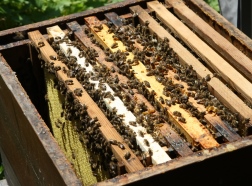
Glyphosate – consequences for honey and bees?

Image: University of Hohenheim | Angelika Emmerling

Lately, there have been more and more cases of glyphosate residuals in the food chain. What about honey? Have residuals been found and could they be avoided? What do beekeepers have to say about glyphosate? And how does glyphosate influence bees? Dr. Klaus Wellner, bee expert at the Apicultural State Institute, can answer your questions about this.

Contact: Dr. Klaus Wallner, Apicultural State Institute, +49 711 459 22662, E-mail


Wie wirkt sich Glyphosat auf Bakterien aus?

Glyphosate is a non-selective herbicide widely used in agriculture. Its mechanism of action affects not only plants, but also bacteria. Microorganisms in the soil come into contact with glyphosate. Can they also develop resistance? How does that work? And how can this be used to increase glyphosate resistance in crops? Microbiologist Prof. Dr. Fabian M. Commichau will explain the answers to these questions to you. 

Contact: Prof. Dr. Fabian M. Commichau, Department of Molecular Microbiology, +49 (0)711 459 22222, email


Is it possible that low amounts of glyphosate stimulate plant growth?

Already Paracelsus knew that small amounts of harmful or poisonous substances can have a positive effect on organisms. In agriculture, this phenomenon is called hormesis. It is particularly common with herbicides, including glyphosate. PD Dr. Regina Belz researches how this effects leads to increasing yields, the effects of substances in combination with environmental factors, and how commercial use can be made of this.

Contact: PD Dr. Regina Belz, University of Hohenheim, Department of Agricultural Ecology in the Tropics and Subtropics, +49 711 459 23681, email